
The personal finance basics are still true. Half the "recommended tools" aren't.
Where do you start when you want to get your money organized? Begin with the basics: a household budget, a plan for unexpected costs, and tools that help with the job at hand. This guide brings those starting points together. Check providers' current features and terms before choosing a service.
What personal finance actually covers
Personal finance is just the act of managing your own money and the decisions attached to it — debt, insurance, saving, investing, housing, taxes, all of it. If it involves money and it's happening in your actual life, it counts.
The tools available for managing it have changed a lot over the years — some genuinely improved, some quietly disappeared. We'll get into exactly which is which. But first, the parts of personal finance that don't go out of date.
The situations that actually test your finances
Over a lifetime, most people run into some combination of these. None of them are moral failings — they're just the situations a real plan needs to be able to absorb.
- Unemployment. Everyone starts out unemployed once. Without savings or support to fall back on, a layoff can turn into debt fast, especially if it wasn't your fault to begin with.
- Underemployment. A job that simply doesn't pay enough for where you live — the math doesn't work no matter how carefully you budget.
- Accident or illness. Medical debt is a commonly cited driver of personal bankruptcy in the US, and it affects plenty of people who technically had insurance at the time.
- Going out on your own. The first real gap between what things cost and what you expected them to cost usually shows up right here.
- Having children. Costs vary enormously depending on insurance, location, and complications — and that's before 18+ years of ongoing costs on top of it.
- Divorce. Beyond the legal fees, it restructures a household's finances in ways that are easy to underestimate going in.
- Death. However it happens, it comes with financial consequences for whoever's left — the size of which depends heavily on how well it was planned for.
- Retirement. A meaningful share of working-age adults have little to no retirement savings, and traditional pensions are far less common than they used to be.
- Consumerism. Simply not keeping up with everyone else, on purpose, is one of the highest-leverage financial decisions most people never actually make deliberately.
Every one of these can be softened by planning ahead of time — even a bad situation right now, caused by not having planned earlier, is still fixable going forward.
Seven steps to actually managing your money
None of this requires a finance degree. It requires being realistic about where you actually are, and honest about where you're not.
1. Build a budget you'll actually use
Start with your net income — what actually lands in your account, not your salary before deductions. You can't spend money you never receive, so budgeting off the bigger pre-tax number just sets you up to overspend.
Track every dollar for about a month, cash, card, or otherwise. Split it into fixed expenses (rent, car payment, utilities — the things that don't flex) and variable ones (groceries, eating out, entertainment — the things that do). Set real goals with real numbers and real dates, write down an actual plan, then adjust it for a few months as reality corrects your assumptions. The budget that survives contact with a real month is the only one that counts.
Keep due dates, payments, and balances together
TidyExpenses brings recurring bills, partial payments, and remaining balances into one place. Review what needs attention, record what you paid, and see bills across the calendar. It tracks your entries; it does not make or verify bank payments.
List price $49 $27 one-time.
2. Build a real emergency fund

An emergency fund is simply money set aside, in an account you can reach quickly, for the car repair or the surprise bill. Its whole job is keeping a bad month from turning into a credit card balance.
How much is genuinely personal — it depends on your income, how replaceable it is, and your own risk tolerance. A commonly cited starting point is around six months of essential expenses; if you run a business, closer to 18 months is a more common recommendation, since business income is harder to replace quickly. Keep it somewhere you can actually access — a normal savings account, ideally one with a decent yield and FDIC insurance, is enough. It doesn't need to be clever, it needs to be reachable.
Building it: treat it as a fixed line in your budget, not a leftover. Automate it out of your paycheck if you can — the money you never see is the money you don't miss. Tax refunds, raises, loose change, anything unbudgeted — all reasonable places to top it up.
Give each part of your spending a place
TidyEnvelopes helps you organize spending and savings into digital envelopes. Record purchases, check recorded balances, and plan how to fund your envelopes on payday. You stay in charge of entering transactions and making any actual bank transfers.
List price $49 $27 one-time.
3. Keep debt under control
Not all debt is equal. A reasonably sized mortgage on a home you can afford is usually considered "good" debt. Unsecured consumer debt — credit cards especially, particularly when it's funding wants rather than emergencies — is the kind that actually causes trouble.
Lenders look at your debt-to-income ratio (DTI) — your total monthly debt payments divided by your gross monthly income. Earn $3,500 a month with $2,000 in debt payments, and your DTI is 2,000 ÷ 3,500 = 57%. Many lenders use around 43% as a rough ceiling for qualifying for a mortgage, and many advisors suggest aiming for somewhere between 18% and 36% overall — treat both as general guidance, not a hard rule for your specific situation.
Student loans deserve their own honest note: income-based repayment plans can be genuinely useful if your income stays low, but the unpaid interest capitalizes over the life of the loan, and whatever's forgiven at the end can be taxed as income in that final year — for some people, a real and substantial tax bill. If that happens, the IRS's Offer in Compromise program is worth knowing about. If you can realistically stick to a standard repayment plan instead — through a second income, cheaper living arrangements, or just time — it usually costs less overall.
Bring your household budget into one view
TidyBudget brings budget tracking, bills, accounts, debt tools, and sinking funds into one browser-based app. Use household and personal views to organize your own numbers and keep future expenses in the plan.
List price $69 $47 one-time.
4. Think about your family
Life insurance is the practical way most people do this. You're not trying to leave a fortune — just enough to cover final expenses and keep your family's situation stable. The younger your family, the more coverage is typically recommended, and stay-at-home parents often need more coverage than people assume, given the unpaid work they'd otherwise be replacing.
A simple way to size it: figure out the monthly income your family would need if you were gone, then divide that by a realistic annual return. Needing $3,000 a month works out to $36,000 a year — at a 5% return, that's roughly $720,000 in coverage (36,000 ÷ 0.05) to sustain that income indefinitely. Adjust the assumptions to your own situation; this is meant to show the math, not to set your number for you.
5. Plan and save for retirement
Start with whatever your employer matches — if they match 5% of your income, contributing at least 5% is close to free money. Beyond that, an IRA (opened through a bank, credit union, or brokerage) is a straightforward next step. Automate the contribution so it happens without your involvement every month — a target-date fund tied to your expected retirement year handles the underlying investment mix for you, so you're not micromanaging it.
Build your monthly plan through conversation
Budget Plan Agent helps organize your income, bills, spending, savings goals, and irregular costs into a monthly plan, a weekly spending number, and a 30-day action plan. It works with supported versions of ChatGPT and Claude; platform access is separate. It is educational budgeting support, not a replacement for professional advice.
List price $39 $17 one-time.
6. Minimize your tax liability
Depending on how complicated your situation is, a real tax professional can be worth the fee many times over — but vet anyone you work with, and keep learning the basics yourself rather than handing the whole picture to someone else unchecked. "Sounds too good to be true" applies just as much to tax strategies as it does to investments.
7. Actually live your life too
Nobody's guaranteed tomorrow, and an entire life spent deferring every bit of joy for a retirement that's decades out isn't really the point either. Live within your means, and if you don't like what your means allow, work on the income side rather than only the spending side. Find the balance between security later and an actual life now — both matter.
Tools and resources to explore
Money tools change. Use this list as a starting point, then check each provider's current features, pricing, and terms before signing up. The right fit depends on what you need help with.
Still legit
- Credit Karma — genuinely free credit monitoring and scores, no subscription. Monetized through offers, not a paywall.
- AnnualCreditReport.com — the one official source for free reports from all three bureaus. Weekly free access became permanent policy in September 2023.
- QuickBooks (Intuit) — still a solid, established option if you're self-employed or running a small business.
- Meetup.com — still around for finding local groups, money-focused ones included.
- PayPal — still a reasonable way to keep your card numbers off random checkout pages.
- Ed2go.com — still an active continuing-education platform if you want a structured personal finance course.
- FinancialMentor.com — still active, including a working debt snowball calculator if you want a quick one-off number.
- IdentityTheft.gov — the official federal site for reporting and recovering from identity theft.
No longer accurate — worth knowing before you go looking
- Mint.com is gone. Intuit shut it down in March 2024 and redirected everyone to Credit Karma. If you see it recommended anywhere as a live tool, that's stale advice.
- "Change your passwords every 90 days" is outdated. Current guidance (NIST's 2025 password standard) explicitly discourages mandatory periodic rotation without cause — it tends to produce weaker passwords, not stronger ones. More on the actual current advice below.
- EveryDollar has free and paid versions. The free version lets you budget manually; features such as bank connection require Premium. Check EveryDollar's current features and pricing before choosing a plan.
- Old deep-linked spreadsheet templates and shortened affiliate links rot fast. Sites get redesigned, renamed, or sold — this report's spreadsheet-template link, for instance, pointed at a page that no longer exists under that address. A source you can rely on next year beats a specific link that might not survive the year.
The corrected password advice, in full
Skip the calendar reminder to change passwords every 90 days — it's not just outdated, current guidance says it actively produces worse security, because people respond to forced rotation with small, predictable tweaks to the same password. What actually helps: a long, unique password per site (a password manager makes this painless), two-factor authentication turned on everywhere it's offered, and changing a password specifically when there's a real reason to — a breach notification, suspicious login activity, or you shared it somewhere you shouldn't have.
How to actually protect yourself from fraud
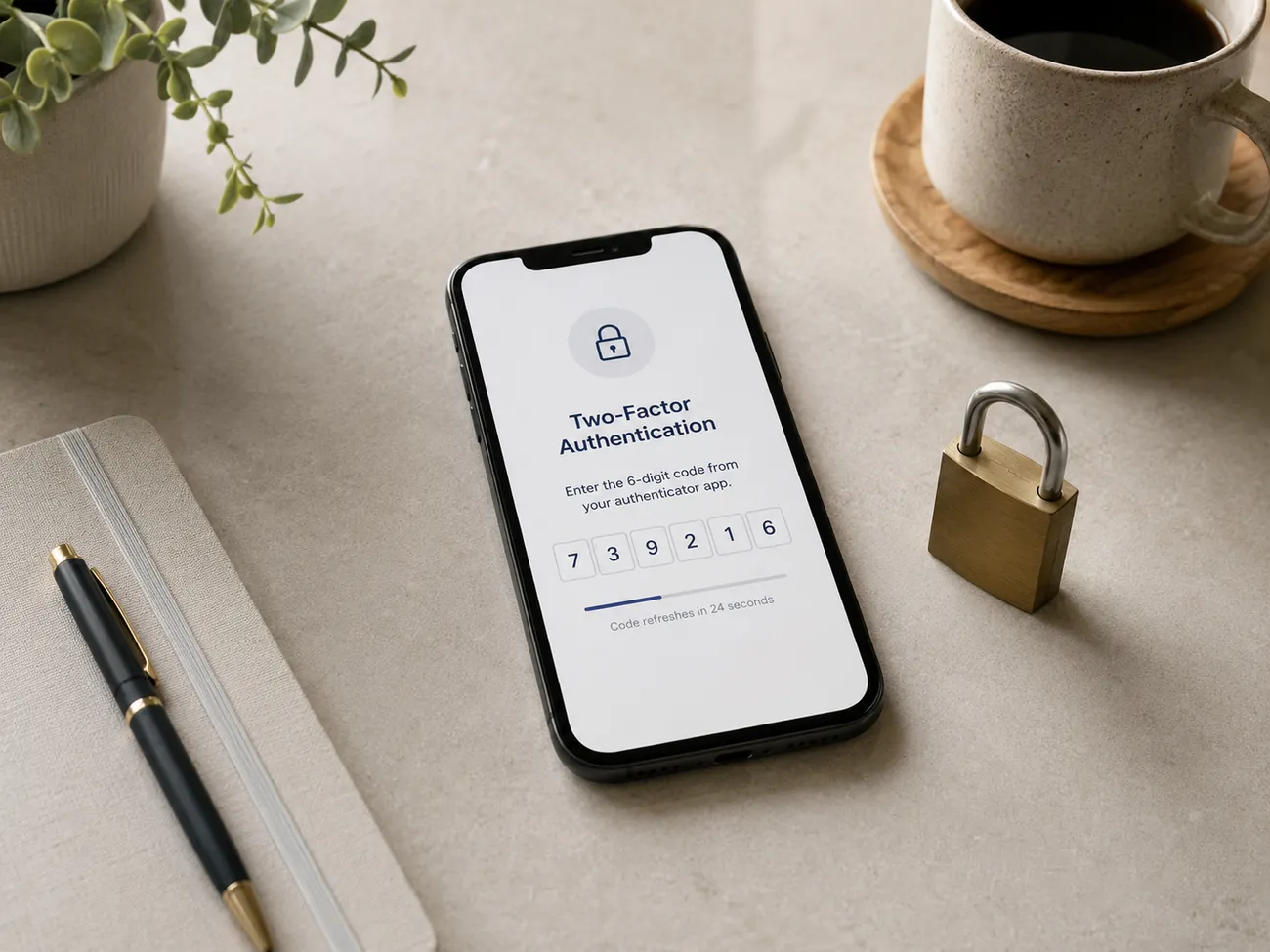
Data breaches are common enough now that assuming your information is already out there somewhere is a reasonable starting point. A few things that actually reduce the damage:
- Learn the common scam patterns. Scambusters.org has been tracking and explaining current scams since the 1990s and is still active.
- Report it if it happens. Use IdentityTheft.gov — it gives you a personalized recovery plan and pre-filled letters, not just a complaint form.
- Keep your SSN out of casual use. If you do freelance or contract work in the US, an EIN from the IRS lets you avoid handing out your Social Security number for that purpose.
- Use PayPal or a virtual card number for online purchases instead of your actual debit card — fewer places your real account number ends up.
- Use a password manager and turn on two-factor authentication — not a 90-day rotation calendar. See the correction above.
- Monitor your credit through a genuinely free service like Credit Karma, so unfamiliar activity gets caught early.
- Balance your accounts monthly. Actually match each transaction against a receipt or a memory of buying it. Report anything that doesn't add up right away.
If something feels rushed, pressured, or too good to be true, it usually is — real institutions rarely need an answer from you in the next ten minutes.
Where this leaves you
The fundamentals in the original report were mostly right, because the fundamentals rarely change — budget honestly, build a real emergency fund, keep debt under control, plan for the people who depend on you, and don't defer your entire life for a retirement that's still decades away. What changes is which specific tools are still around to help you do it, which is exactly why worth re-checking every so often instead of trusting a five-year-old list.
If you want a number to start from
The free Money Leak Score takes about two minutes, asks a handful of plain questions, and shows you the one leak worth fixing first — no bank login, nothing saved, completely free.